7 Signs Your Child is on the Verge of Sports Burnout (And How to Fix It)
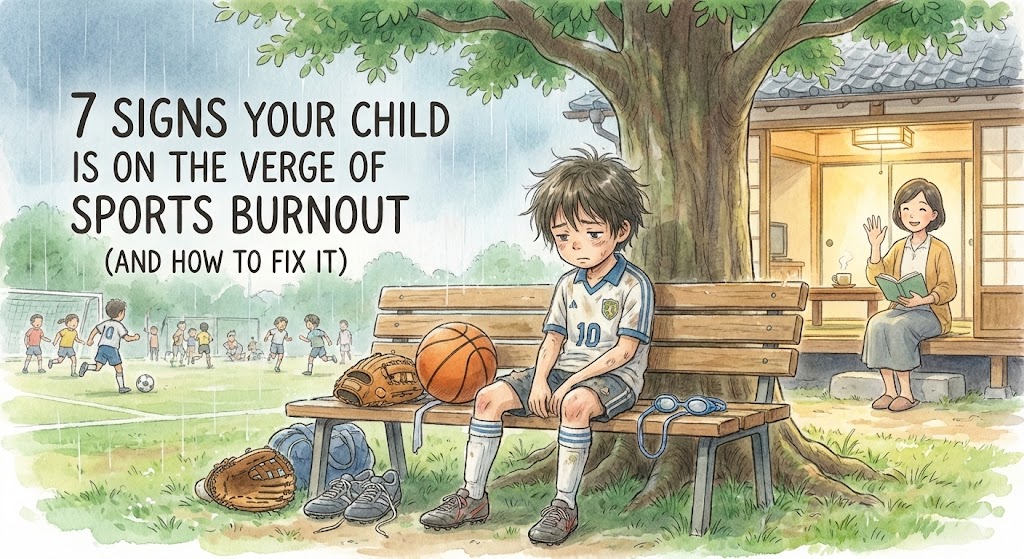
## The 70% Problem: Spotting "Quiet Quitting" in Youth Sports
We put our kids in sports to build character, grit, and friendships. We want them to learn the value of hard work, whether they are paddling through intense surf or running drills under the hot Ewa sun.
But there is a silent epidemic happening on fields and courts across Oahu. Research continues to show that roughly **70% of kids quit organized sports by age 13**. The primary culprit isn’t a lack of talent—it’s burnout.
Burnout isn’t just being tired after a double-header. It’s a state of physical and emotional exhaustion where a child feels like their effort doesn't matter anymore. If your child is still showing up but the "spark" is gone, they might be **“quiet quitting”**—doing the bare minimum to survive the season without actually enjoying a single minute of it.
### The Demographic Shift
Recent data from 2025 and 2026 shows that participation is dropping fastest among **Asian youth (down 5.2%)** and **Black youth (down 4.1%)**. While the reasons vary, the "pay-to-play" model and the pressure to specialize early are major drivers. Interestingly, a 2025 study found that **Native Hawaiian youth** actually meet CDC physical activity guidelines at a higher rate (26%) than the state average (20%), often because of a connection to traditional sports like paddling.
As a parent, spotting the red flags early is the only way to save their love for the game. Here are the 7 signs your keiki is on the verge of burnout.
---
## The Red Flags of Burnout
### 1. The Joy and the "Shaka" Are Gone
The #1 reason kids play is fun. The #1 reason they quit? It stopped being fun. If your child used to race to the car but now drags their feet, pay attention. If they score a goal and return to the sidelines with a flat expression rather than a smile or a shaka, they aren't just "focused"—they’re detached.
### 2. “Phantom Injuries” and Vague Pains
Is your child complaining of headaches or stomachaches right before practice? While overuse injuries (like Little League elbow) are real, sometimes the body speaks when the mind can’t. Burned-out athletes often manifest physical symptoms as a subconscious way of asking for a break.
### 3. The Silent Car Ride Home
* **Healthy Athlete:** Wants to talk about the big play, the teammates, or where to eat.
* **Burned-out Athlete:** Silence, one-word answers, or headphones on immediately.
If they are emotionally withdrawing from you and the team, they are likely exhausted.
### 4. Showing Up, But Not "Showing Up"
This is the classic "quiet quit." They are physically at practice, but taking drills at half-speed. They stop diving for loose balls. They "forget" their cleats more often. It’s not laziness; it’s self-preservation.
### 5. The "Spillover" Effect (School & Sleep)
Burnout doesn't stay on the field. Watch for:
* **Sleep:** Trouble falling asleep or waking up exhausted.
* **Grades:** A sudden dip in focus or academic performance.
* **Life:** Loss of interest in other hobbies like surfing or gaming.
### 6. Performance Drops Despite Hard Work
In our humid climate, physical exhaustion hits fast. But burnout creates a paradox: your child is training harder, yet getting slower or less accurate. This is **Overtraining Syndrome**. Only rest—not "pushing through"—can fix a fatigued central nervous system.
### 7. Crushed by the "Scholarship Trap"
In Hawaii, the pressure to get a scholarship to the mainland is intense. But when a 10-year-old is worried about "letting the family down," anxiety replaces enjoyment. If they fear your reaction to a bad game, the environment has become toxic.
---
## The Recovery Plan: How to Reset
### 1. Audit the Schedule
The American Academy of Pediatrics recommends at least **1–2 days off per week** from organized sports. Look at the weekly load honestly. If they don't have "white space" in their calendar, you need to create it.
### 2. The "No-Pressure" Talk
Don’t ask "Why are you playing poorly?" Instead, ask: **"How are you feeling about the season right now?"** Listen without trying to fix it immediately. Sometimes, just knowing they have an "out" is enough to lower the stress.
### 3. Scale Back to Move Forward
You don't always have to quit; you can just scale down. Skip an optional practice. Take a season off from club ball to play rec league or a different sport entirely. **Go to the beach.** Unstructured play in the ocean is the best mental reset there is.
### 4. Prioritize the "Big Three"
You cannot out-train a bad lifestyle.
1. **Sleep:** 8–10 hours (especially for teens).
2. **Nutrition:** Enough calories to fuel the work.
3. **Hydration:** Critical in the island heat.
### 5. The Power of Six Words
Research shows the most liberating words a parent can say to an athlete are:
> **"I love watching you play."**
Stop the "post-game press conference" in the car. Let the ride home be their sanctuary.
**Bottom Line:** The goal isn't to raise a pro; it's to raise a healthy human who loves to move. Protect their love for the game, even if it means missing a tournament or two.
---
**Looking for a lower-pressure league or a new sport to try?** Search our local Oahu directory at [KeikiAthletics.com](https://keikiathletics.com).